

ESTRID SØRENSEN
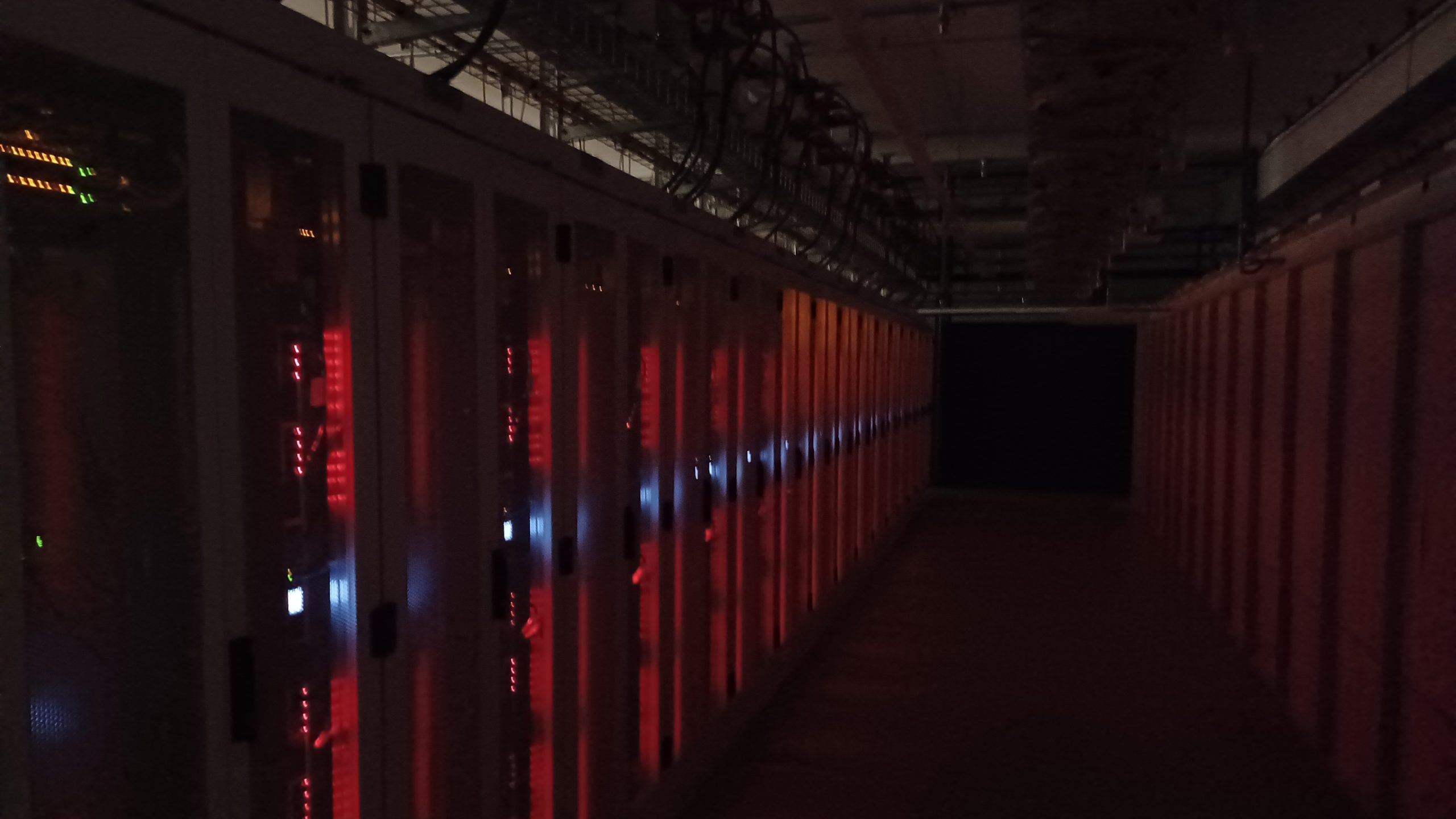
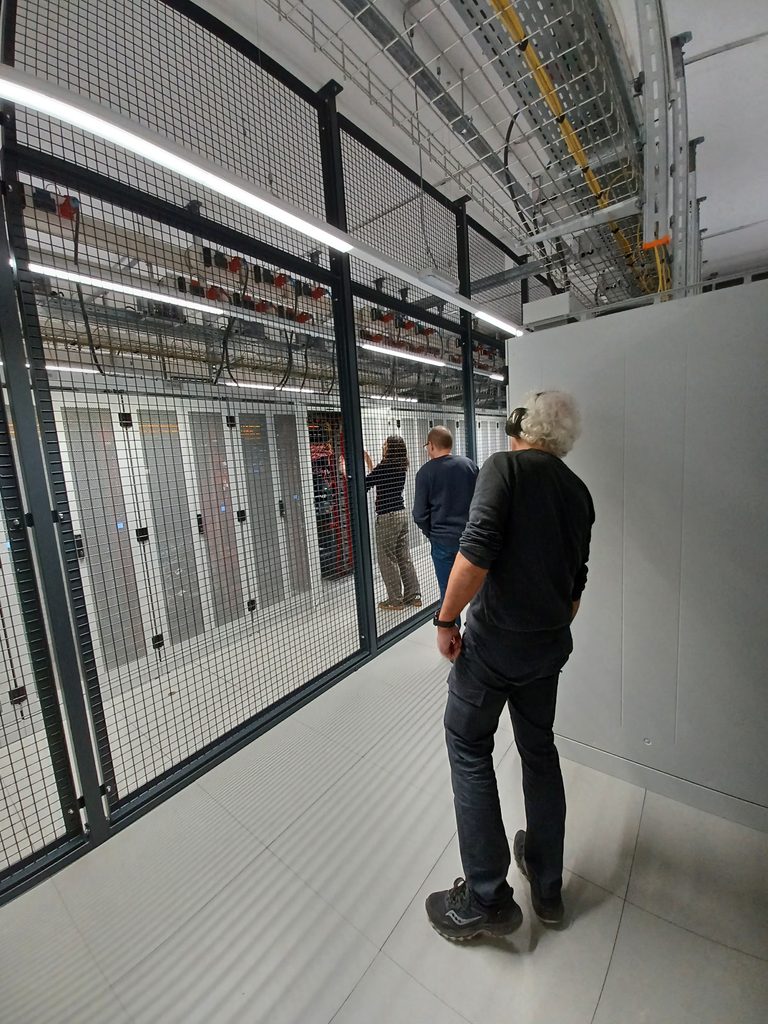
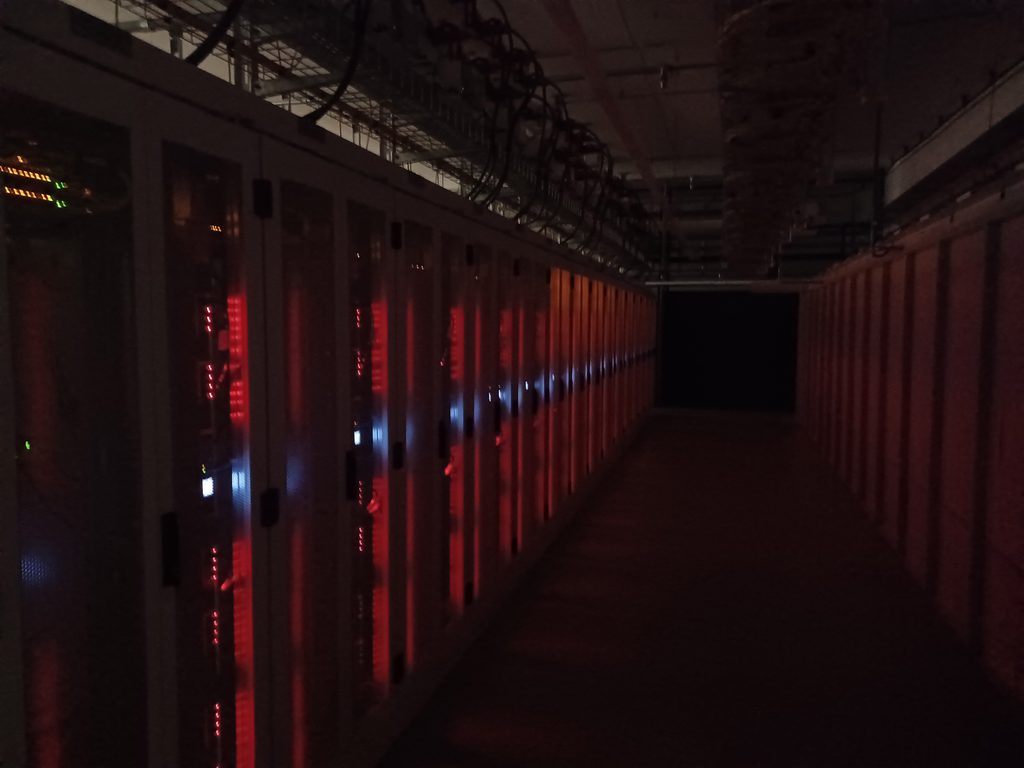
At my first visit to a university data centre for my ethnographic research, I was struck to have to pass a security fence, to get permission through an intercom, clear a second door, sign a visitors’ book with exact times of entry and exit, and put on shoe covers and earplugs. The ritual is not security theatre, although it soon became routine, as I travelled across Germany and visited many university data centres. The ritual expresses a central virtue of the trade: to comply with the DIN EN50600 data centre norm. This is what guarantees smooth operation: a data centre that runs without interruption, without incident, without deviation from the norm, unnoticed.

Estrid Sørensen
c:o/re Fellow 04/26 – 09/26
Estrid Sørensen is a professor for anthropology of knowledge at Ruhr University Bochum. She has conducted research within a wide field of science and technology studies, including educational technologies, media harm discourses, cyber security, digital methods and most recently she has turned towards researching data infrastructures. Her ethnographic and historical research addresses scientific data centres and high-performance computing and inquires the co-enactment of knowledge production and planetarity.
It is well-known in the field of data centre operators that humans are the biggest risk to smooth operation. They are curious, they touch things, and when sockets and circuit boards are touched, then break easily. Data centres are fragile. In the stories of the data centre operators, these “humans” that allegedly broke things were not the operators themselves; they were the scientists. According to the DIN EN50600 norm, customers are to be kept out of data centres. As a researcher interested in the planetary relations of scientific knowledge production through data infrastructures, I saw it as more than a physical boundary when scientists were kept out of the data centre. Their exclusion also delegates concern for scientific infrastructures – and potentially for their climate effects – away from science. It makes it easier to ignore the planetary effects of scientific calculations, simulations, or AI processing, than to take them into account. Isabelle Stengers argues that science tends to neglect societal concerns that potentially “disturb” their research. The division of labour set among others through the data centre norm contributed to keeping scientists undisturbed by concerns about how their data processing and thus their knowledge production affects the planet.
Scientists increasingly address questions of the carbon footprint of scientific knowledge production. In additional to questions of flying and conferencing, which are integral dimensions of science, researchers also attend to questions of computing’s energy consumption. Contrary to most studies engaging with carbon footprint of scientific knowledge production, whose key approach is to quantify energy consumption and computing cycles, my interest is in understanding the socio-material arrangements that prevent scientific knowledge production from being concerned with their planetarity. I address this by inquiring about the obstacles to linking, both conceptually and practically, scientific knowledge production with its planetary effects.
The data centre operators I talked to were also concerned about their data centres’ energy consumption, which is a key aspect of scientific knowledge productions planetarity. They all took care to comply with the government’s new energy efficiency requirements. Yet they also all agreed that more efficiency would not lead to less energy use. Historians of computing agree: The uninterrupted increase in computers’ ability to process more bits per energy unit has always only led to more optimised and powerful devices, models, and software, and thus to more computing and increased energy consumption – never to less. Those responsible for energy saving at the universities had different strategies to meet the challenge of the growing energy consumption through computing. In the following I describe three strategies: a delegating, a hopeful and a resigned.
One strategy was to solve the problem by delegating it away: A data centre operator manager maintained that since it was impossible that the data centre would ever use less energy, the university had to take care to use renewable energy sources. The availability and just distribution of renewables fell to others.
Another, hopeful strategy was to make knowledge solve the problem: At one university, an energy manager hoped to decrease scientific computing’s energy consumption by individualising the responsibility for energy spending among scientists. His strategy was to appoint energy responsible persons in each department and to collect data from the researchers about the energy use of their computing equipment. This data was the foundation for managing and saving energy, he emphasised. However, the “real problem”, he continued, would not emerge before they had all the data. The “real problem” was how to prioritise the energy consumption: Once they knew who consumes what quantities, the next step would be to decide which scientists should be allowed to consume energy and who should not. Hopefully, his colleague added, someone would find a way to prioritise the distribution of energy before the day when all data were collected.
At a third university, a facility manager responsible for the data infrastructure’s energy consumption identified the same problem, yet she was rather resigned that the problem would never emerge. Her university functioned as a national high-performance computing centre with significantly more energy-intensive computing facilities than most other universities. She explained that her job was to forecast the university’s data infrastructure demand ten to fifteen years ahead and to justify expenditure of forty or fifty million euros. With her core work tool, a building information modelling software (BIM), she would daily produce energy trendlines, load curves, rankings of energy consumption in different areas, etc. for the university data centre. Yet, this had nothing to do with energy efficiency, she emphasised. In her understanding efficiency is about entering something at one end of a machine and getting something better out at the other end. The BIM software, however, as she said, registers the energy put into the data centre and the computing cycles coming out. It sees data processed, sent and received. Don’t you see how hollow this is, she asked rhetorically, because you can process, send and receive a great deal of rubbish! She repeated that efficiency is about getting something better out than what you enter into the machine, not simply processing something. What in her view was missing was a metric for meaningful scientific output per energy unit. Yet people are reluctant to talk about meaningful scientific output, she concluded; they only want to talk about computing cycles.
The delegation strategy avoided linking energy consumption and scientific knowledge production and thus avoided engaging with science’s planetarity. This was different with the hopeful and the resigned strategies. They both did so through a quantitative logic of counting and distributing energy. And both got stuck at the qualitative question of how to decide on the distribution of limited energy, and of limited computing. Metrics and measurements turn energy consumption into objects separate and detached from scientific knowledge production and its computing practices. The hopeful strategy imagines scientists to be confronted with figures legitimising decrease in their energy consumption by way of limited computing. This strategy turns scientists into individual energy consumers, who can be compared and prioritised from afar, which interferes with their agency and control over their scientific knowledge production. No surprise that scientists are expected to protest. Just as the data centre norm separated technical from scientific staff – and distanced science from planetary concerns – the quantification of energy and computing detached scientific knowledge production from its energy consumption. The resigned attitude of the facility manager expects the university system to be resistant to such interferences into scientific knowledge production and engagements with what is good science. Yet, this approach identifies that good science and energy use need to be thought together. An equation such as the one the energy manager suggests will not achieve that. It will keep them as separate objects, only related mathematically.
The challenge of linking scientific knowledge production to planetarity both conceptually and practically requires scientific practices and computing infrastructures that make energy an internal dimension of scientific knowledge production. I have described two arrangements of scientific computing infrastructures that work as obstacles to linking scientific knowledge production with its climate effects. To change this, and to grant scientific knowledge production planetarity requires a departure from practices that keep computing infrastructures smooth and unnoticed. It requires that scientific computing infrastructures are politicised; that they become objects of debate about scientific knowledge production and science politics. Neither computing infrastructures nor planetarity is simply a technical or management problem. They are issues deeply concerning the place of scientific knowledge production in the world; not only in the social world, but also in the planetary world.