
VICTOR DE LORENZO
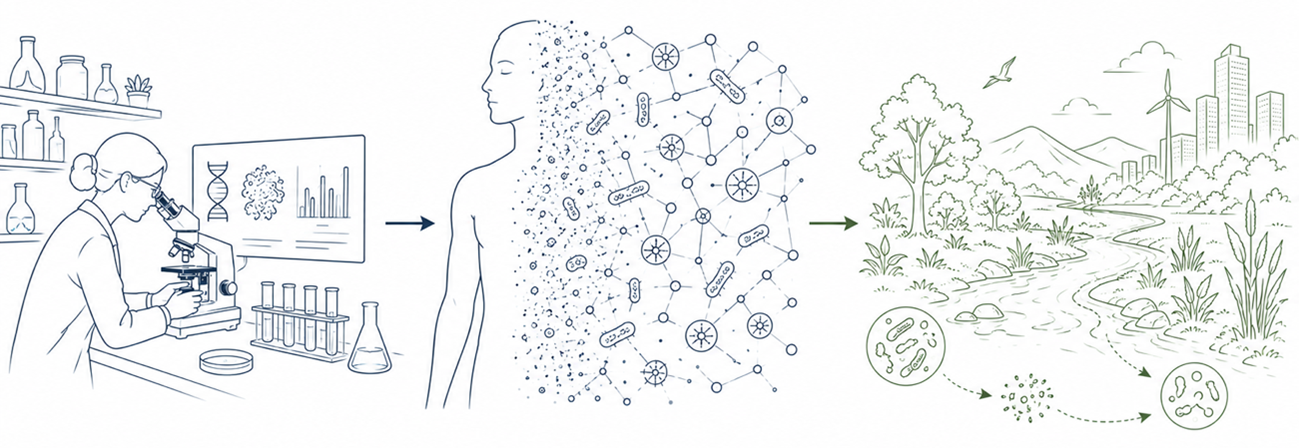
When Bruno Latour published his famous book Science in Action, he transformed his experience of spending time inside an experimental laboratory into a broader reflection on how scientific knowledge is actually produced. His book is far from unique. It is not uncommon to find social scientists, anthropologists, philosophers, or artists spending time in research laboratories, particularly in the biological sciences, seeking to understand how knowledge emerges from the everyday practices of experimental work. In fact, many contemporary research projects actively encourage such interactions. Research consortia funded by the European Commission, for example, routinely include scholars from the social sciences and humanities to address questions of ethics, public engagement, and societal impact that experimental scientists often have neither the training nor the time to pursue in depth. Over the years, our own laboratory in Madrid has hosted several visitors from outside the natural sciences. I vividly remember a Lebanese visual creator whose stay eventually led to an artistic exploration of communication between humans and microorganisms. Another of her projects with us investigated the possibility that the microbiome shared by urban populations might influence not only health but also aspects of personality, social behaviour, or even political attitudes.
Victor de Lorenzo
c:o/re short-term Fellow (04-06/26)
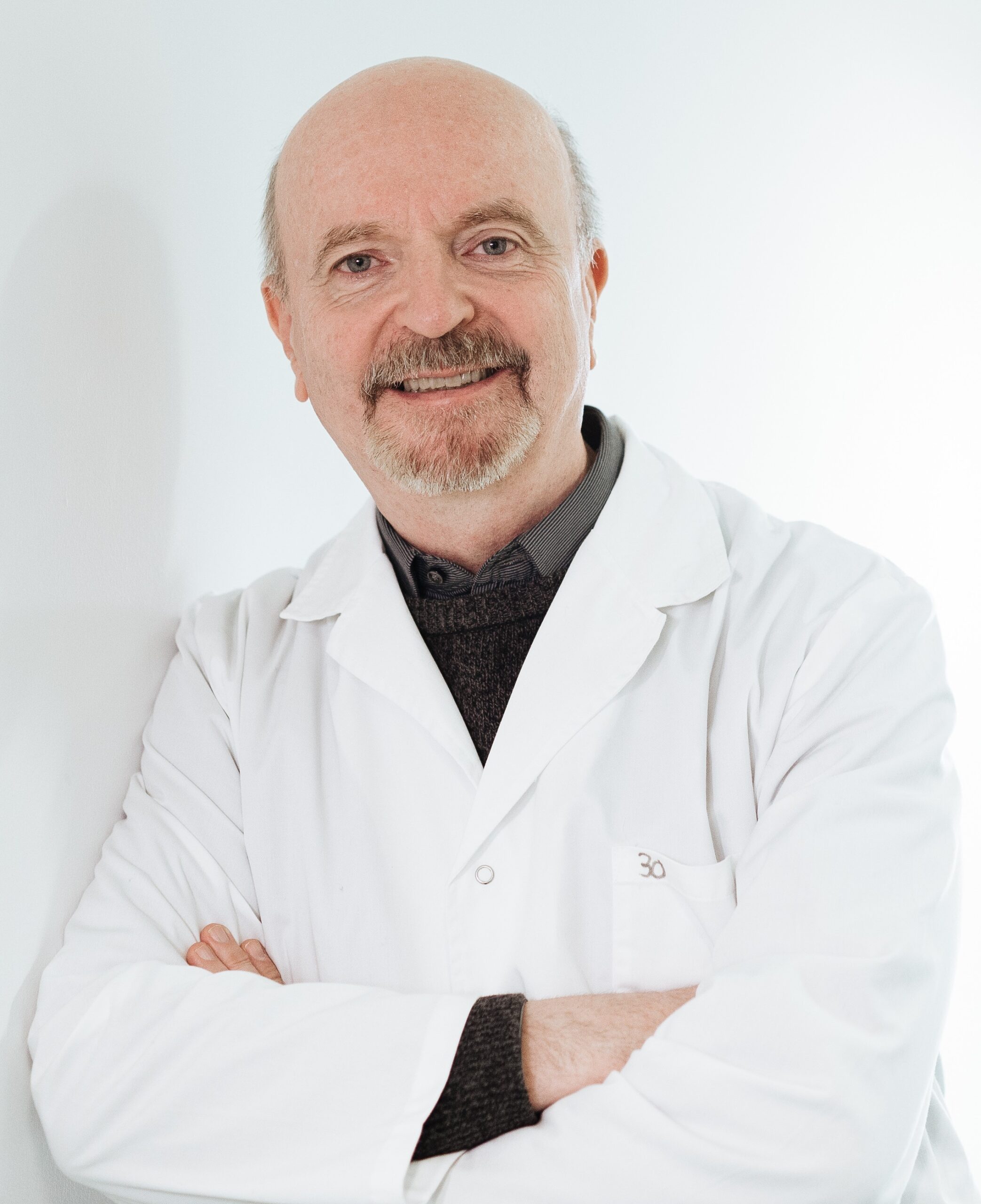
Victor de Lorenzo (Madrid, 1957) is a Chemist and Professor of Research in the Spanish National Research Council (CSIC), where he currently heads the Laboratory of Environmental Synthetic Biology at the National Center for Biotechnology. His work explores the interface between Synthetic Biology and Environmental Biotechnology, including global-scale bioremediation interventions for counteracting climate change.
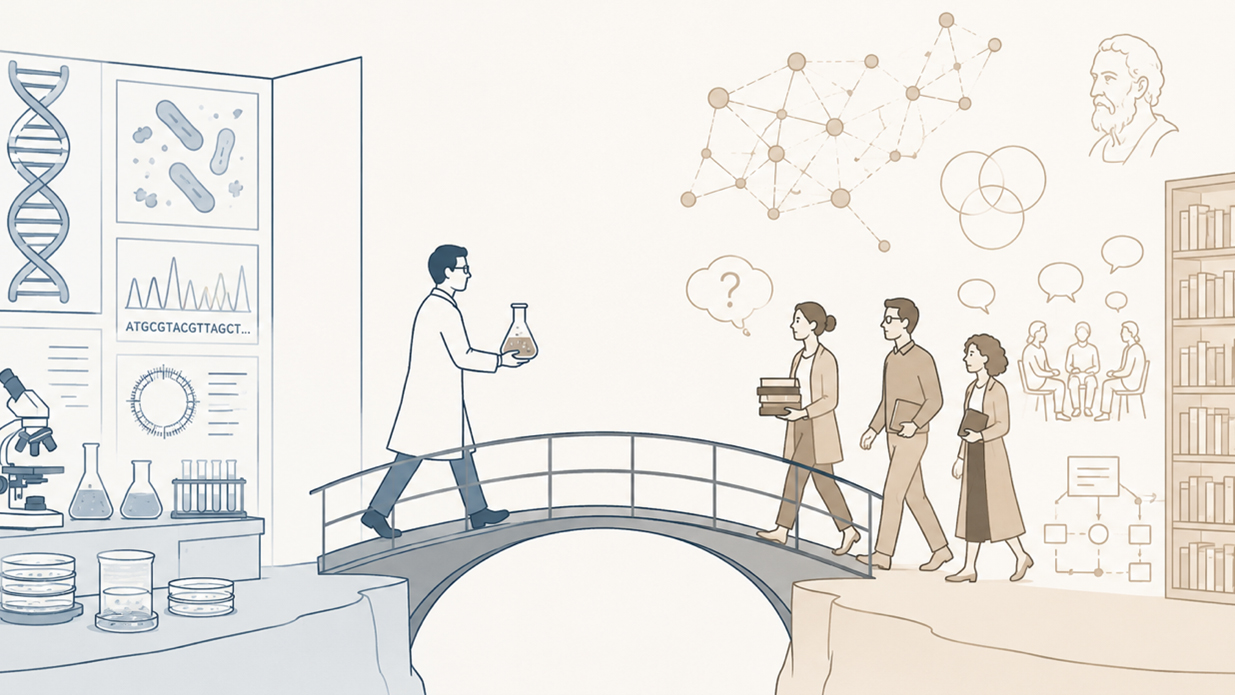
For these reasons, it is not particularly surprising to encounter social scientists or artists in a laboratory. What is far less common is the reverse situation: an experimental scientist spending an extended period immersed in a community of philosophers and social theorists. Yet this is precisely what happened to me during my recent stay at the Käte Hamburger Kolleg in Aachen. The experience left me with a simple question: what might a microbiologist and synthetic biologist learn by stepping outside the laboratory and into a world where concepts, narratives, and assumptions themselves become objects of inquiry?
A practical question with philosophical angles
My motivation for coming to Aachen was not initially philosophical at all. It emerged from a very practical problem that affects many researchers working in environmental biotechnology. For decades, microbiologists have been engineering bacteria capable of performing tasks that could generate substantial societal benefits: fixing atmospheric nitrogen and thereby reducing fertilizer use, controlling agricultural pests through biological mechanisms, or degrading pollutants in contaminated soils and waters. From a purely technical perspective, the evidence supporting these approaches has accumulated steadily for more than thirty years. One might therefore expect widespread public enthusiasm. Instead, the opposite often occurs. The moment the phrase genetically modified microorganism enters the conversation, concerns (if not panic) about risks tend to overshadow discussions of potential benefits. This reaction is particularly pronounced in Europe, where regulatory frameworks make the environmental deployment of genetically engineered microorganisms extraordinarily difficult. Why is this the case?
Several explanations are commonly offered. There are legitimate concerns about environmental safety, ecosystem disruption, and impact on biodiversity. There are also worries about biosecurity and the potential misuse of biotechnology. Historical mistrust about large biotechnology corporations has further contributed to public skepticism and in some cases fierce opposition. All of these explanations undoubtedly contain elements of truth. Yet I have long suspected that they do not fully explain the intensity of the resistance. Something deeper seems to be at work.
The question of nature
Gradually, I came to notice that much of the controversy revolves around a more fundamental issue: the perception that genetic engineering deliberately alters the course of Nature. Behind debates about risk often lies a more intuitive concern—that we are doing something that feels somehow unnatural. This intuition immediately raises a philosophical question: what do we actually mean by natural?In contemporary societies, the natural is often associated with what is good, authentic, or morally acceptable, while the artificial or synthetic frequently carries connotations of manipulation or transgression. Interestingly, this distinction is embedded in European GMO (genetically modified organisms) legislation itself. Genetic changes that occur through natural evolutionary processes are generally considered acceptable, whereas similar modifications introduced intentionally through genetic engineering are treated very differently and much more restrictively.From a scientific perspective, however, the distinction is often less clear-cut than it appears.Moreover, this concern about naturalness does not seem to apply equally across all domains of biotechnology. Genetic engineering in medicine, for example, enjoys much broader public acceptance. Gene therapies, recombinant pharmaceuticals, and engineered biological products are often celebrated rather than feared.The difference may lie partly in visibility. A therapeutic protein produced inside a fermentation tank remains largely invisible to the public, whereas a genetically modified organism released into the environment becomes a tangible and highly symbolic presence.
Why microorganisms are special
Engineered microorganisms face a further obstacle. Beyond concerns about safety, regulation, or corporate interests, bacteria suffer from a profoundly negative public image. Not without reason, of course. Most people have personally experienced bacterial infections. News media routinely report on antibiotic-resistant pathogens and emerging microbial threats. Popular culture has spent more than a century depicting microbes primarily as sources of disease and danger. There are virtually no fictional representations of bacteria portrayed as beneficial agents in >100 years of cinema—in contrast with so many movies with microbes starring as villains. Against this cultural background, the deliberate release of genetically modified microorganisms is easily imagined as a scenario of risk long before it is considered a source of potential benefit. During my time at KHK, however, I entertained that these questions could be pushed much further. One particularly fascinating line of discussion concerns the implications of microbiome research for our understanding of human identity. For centuries, we have tended to think of ourselves as autonomous individuals composed exclusively of human cells. Yet contemporary biology increasingly reveals a more complicated picture. Human bodies host vast microbial communities that influence metabolism, immunity, development, mood, and potentially aspects of cognition and decision-making.
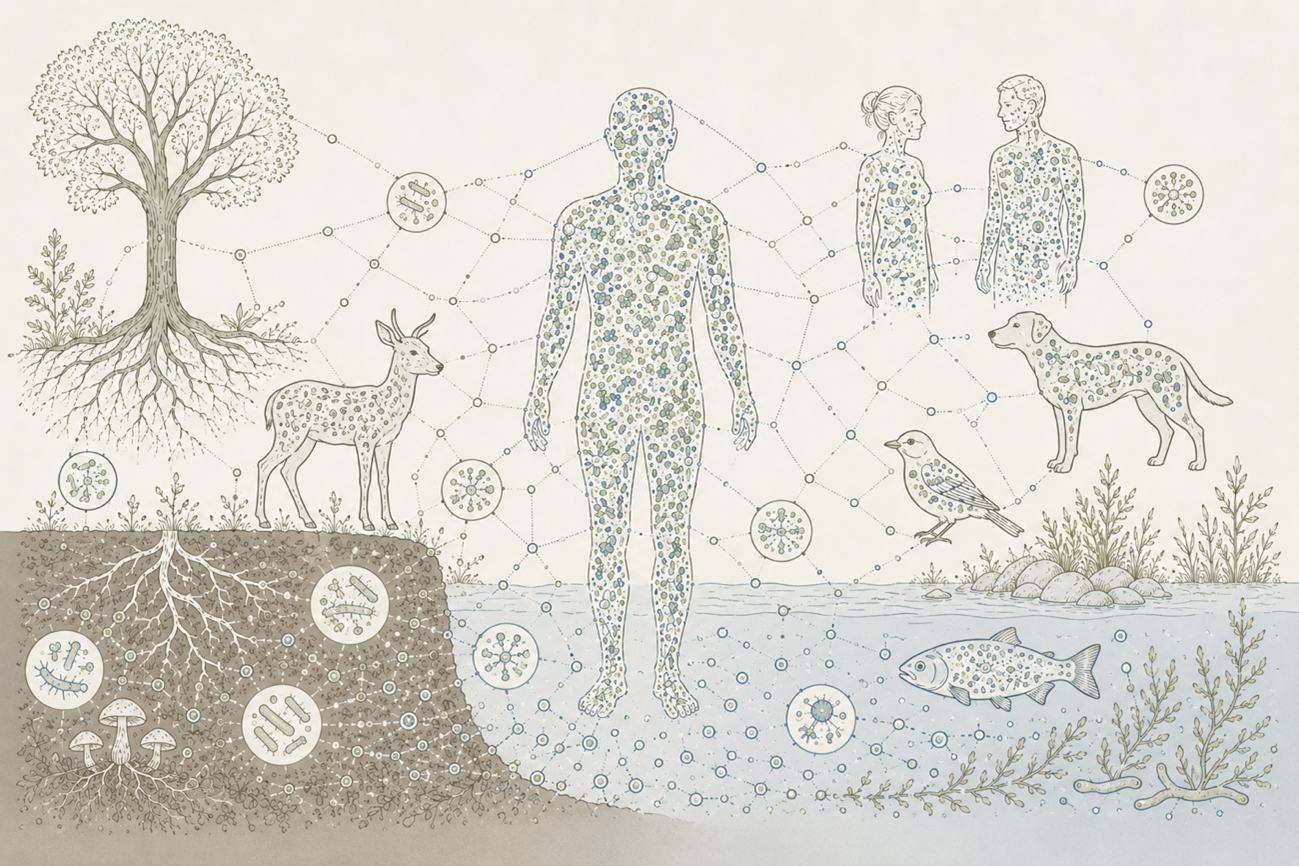
The growing body of research on the gut-brain axis has made it difficult to maintain a sharp distinction between ourselves and the microbial world that inhabits us. If our emotions, behaviours, and cognitive states are partly shaped by microbial interactions, what exactly constitutes an individual human being? What becomes of traditional notions of autonomy, agency, or even moral responsibility? These questions move well beyond microbiology. They enter the domains of philosophical anthropology, ethics, and ontology. They also challenge the familiar image of humans as entities fundamentally separate from nature. Instead, they suggest a vision of human existence as deeply entangled with broader ecological processes mediated by microorganisms.
A second theme that repeatedly emerged during my stay concerns the meaning of engineering itself. Many contemporary critiques of biotechnology interpret genetic engineering as part of a broader agenda of controlling, exploiting, and dominating nature exclusively for human benefit. There is certainly historical justification for such concerns. Yet I began to wonder whether this is the only possible interpretation. Could biotechnology also be understood differently? Could genetic engineering become a tool not only for control but also for stewardship? Not only for extraction but also for restoration? Not only for domination but for forms of care, negotiation, and coexistence with the living world? These questions resonated strongly with ongoing discussions at KHK about environmental futures, sustainability, and alternative ways of imagining human relationships with the biosphere.
Crossing intellectual Borders
Perhaps the most striking aspect of my stay was not any particular answer but the encounter itself. Throughout my scientific career, I have often discussed these issues informally with fellow researchers. Most agree that they are important questions. Yet the pressures of contemporary science—experiments, publications, grant applications, administration—leave little room for sustained engagement with them. Part of the problem may be institutional. Educational systems tend to separate students early into scientific and humanistic tracks. Over time, these trajectories produce distinct intellectual communities that rarely interact in meaningful ways. Consequently, scientists and scholars in the humanities often develop different vocabularies, different assumptions, and even different intuitions about what is an interesting question. At KHK, I repeatedly encountered perspectives that challenged my own habits of thought. During an earlier visit, for example, I gave a talk comparing contemporary exploration of microbial diversity to Christopher Columbus searching for safe harbours in the Caribbean—a metaphor that seemed perfectly innocent to me. Several participants in the audience immediately questioned the colonial assumptions embedded in the comparison. The reaction surprised me. Yet it also forced me to reflect on how casually scientists often deploy metaphors without considering how they may resonate in different intellectual or cultural contexts. The experience was both unsettling and illuminating.
Another unexpected discovery was my encounter with scholars working on degrowth. Before coming to Aachen, I had mainly encountered degrowth through political debates. At KHK, I began to appreciate it as a rich field of theoretical inquiry with important implications for biotechnology and synthetic biology. Could biotechnology contribute to societies that seek to reduce material consumption rather than continuously increase it? Could engineered biological systems help societies and economies become more resilient in the face of ecological stress and environmental change? What role might biotechnology play in futures defined not by perpetual growth, but by adaptation, repair, and long-term sustainability? These were questions I had rarely encountered in mainstream discussions of biotechnology. They point to a deeper dilemma. Should we develop new technologies to help prevent the systemic degradation of our planet and avoid ecological collapse? Or should we accept that some forms of collapse may be unavoidable and instead focus on technologies that can help societies endure, adapt, and recover in a post-collapse world?
What I am taking home
I arrived in Aachen hoping to better understand why environmental biotechnology encounters such strong public resistance. I am leaving with a much broader set of questions. Perhaps the debate over genetically modified microorganisms is not ultimately about regulation, safety, or risk assessment alone. Perhaps it reflects deeper uncertainties about how we understand nature, technology, and ourselves. If so, addressing these challenges may require more than better science or better communication. It may require new narratives. Narratives in which humans are not conceived as beings standing apart from nature but as participants in complex ecological relationships. Narratives in which biotechnology is understood not merely as a technology of control but also as a potential instrument of care, restoration, and responsibility. And genetic engineering not as one more tool for domination of the live world, but as a phenomenal mechanism of ecological co-creation along with other live actors. Whether such narratives can be developed remains an open question, but certainly we need to bring to the stage epistemological perspectives beyond the limited and hardly ever questioned straight empiricism of scientific Western tradition. After seven weeks among philosophers, sociologists, historians, and social theorists, I am more convinced than ever that these are questions worth pursuing.