
c:o/re Fellow 09/26 – 08/27
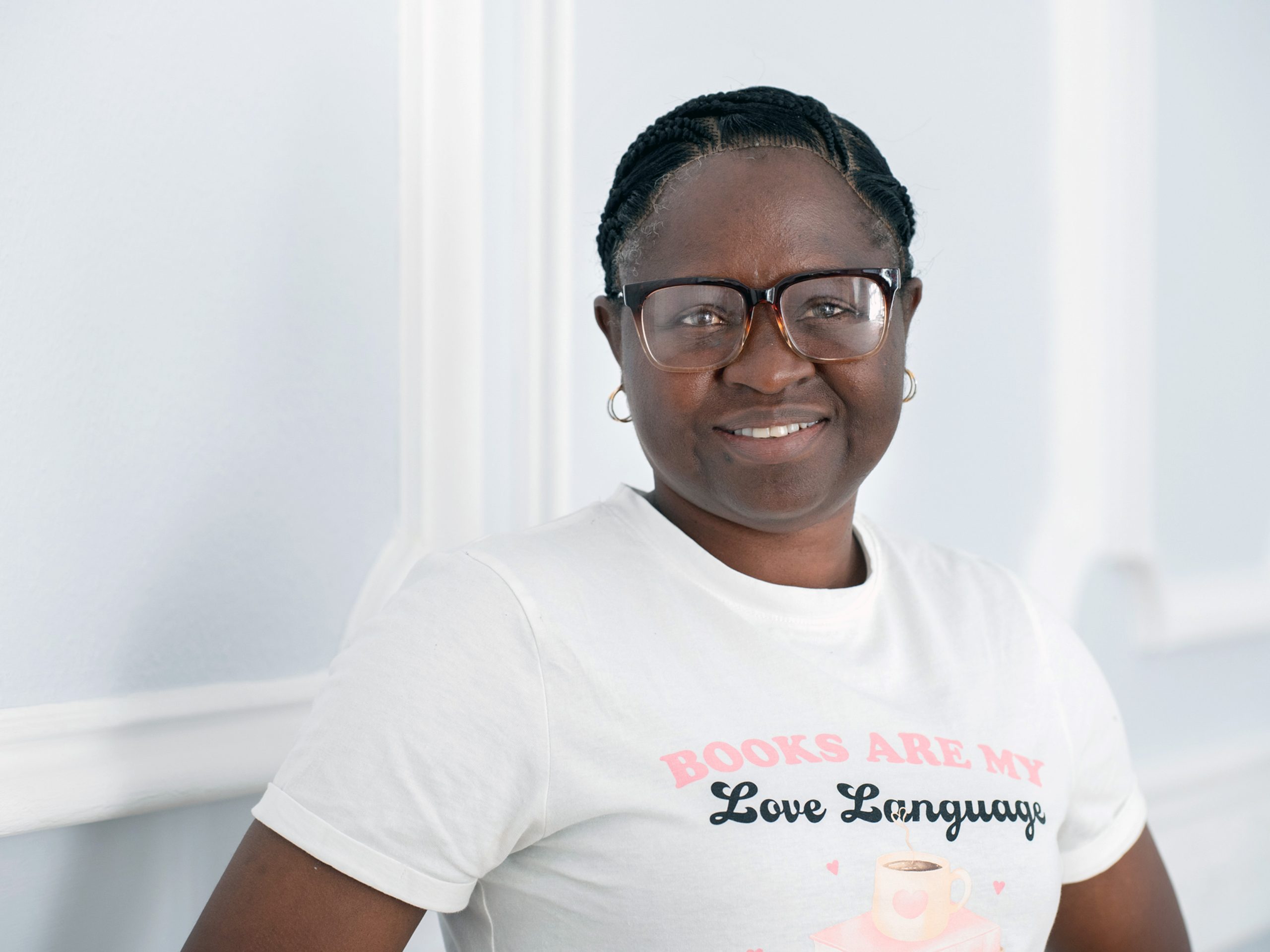
Adedoyin Bankole is a Senior Lecturer at the Federal University of Petroleum Resources, Effurun, Nigeria, specializing in analytical and environmental chemistry. Her research spans environmental pollution, hazardous waste, water quality, environmental risk assessment, artificial intelligence and machine learning, water governance, and sustainable development, with particular interests in scientific evidence, data, and the implementation of SDG 6. She served as Director of the Centre for Water Research at FUPRE from 2024 to 2026, where she led research and initiatives addressing water quality, pollution, and sustainability. Her work combines environmental science with interdisciplinary approaches to understanding water-related challenges and their implications for public health and policy. She is currently a c:o/re Fellow at RWTH Aachen University, where her research examines the relationship between scientific knowledge, policymaking, and water governance in the Global South.
From Data to Decisions: The Science–Policy Gap in Water Research and SDG 6 Implementation in the Global South
Water is increasingly understood not only as a resource and environmental concern, but also as a matter of public health, development, and governance. Over recent decades, water research has generated substantial scientific knowledge on water quality, pollution, contamination, and human health. Yet scientific evidence does not necessarily translate into effective policy responses. This disconnect is particularly visible in the Global South, where persistent water insecurity, infrastructural deficits, fragmented data infrastructures, and urgent public health demands coexist with growing bodies of scientific research.
I examine this disconnect as a science–policy gap: a space in which scientific knowledge is produced, interpreted, negotiated, and selectively mobilized within institutional and policy contexts. Rather than treating the gap simply as a problem of insufficient data or weak communication between scientists and policymakers, I ask how different contexts shape what counts as evidence, whose expertise is recognized, and how scientific knowledge acquires authority in water governance.
Drawing on science and technology studies, science–policy studies, and environmental governance, the project engages the concept of “Varieties of Science” to examine how scientific practices, standards of evidence, and research priorities are shaped by their socio-political and institutional settings. Focusing on SDG 6, I seek to understand how these dynamics influence the movement of water research into policy and how Global South contexts generate distinctive forms of scientific practice. During my term at c:o/re, I aim to contribute to a more contextualized understanding of science–policy relations and the epistemic dimensions of water governance
Publications (selection)
Bankole, A. O., & Agbaogun, B. K. (2026). Artificial intelligence and machine learning applications in environmental pollution monitoring and management. In P. C. Onianwa & G. U. Adie (Eds.), Chemical environmental pollution: A selection of reviews and studies (2nd ed., pp. 169–197). ISBN: 978-978-50704-0-8. Depet Publishers.
Bankole, A. O., Maku, O. E., & Yusuf, A. A. (2026). A Data-Efficient and Explainable Machine Learning Framework for Predictiing Microbial Contamination Risk in Groundwater of Resource-Constrained Regions. European Journal of Applied Science, Engineering and Technology, 4(2), 207-215. https://doi.org/10.59324/ejaset.2026.4(2).13
Bankole, A. O., Obire, N., Fadairo, E. A., Birma, G. J., Olowoyo, D. N., Alegbemi, A. J., & Akpeji, B. H. (2026) Dietary Exposure and Human Health Risk Assessment of Toxic Metals in Marketed Crayfish (Procambarus clarkii) from the Niger Delta Region of Nigeria. Journal of Geoscience and Environment Protection, 14, 153-173. doi: 10.4236/gep.2026.144010.
Bankole, A. O., & Omokhoa, A. D. (2026). Occurrence, Spatial Distribution, Temporal Variability, and Associated Health Risks of Volatile Organic Compounds (VOC) Exposure in the Gbetiokun and Opuama, Niger Delta, Nigeria. Journal of Applied Sciences and Environmental Management, 30(5), 1412–1422. https://www.ajol.info/index.php/jasem/article/view/324032.
Bankole A.O., Ogunkeyede AO, Odionye JN, Giwa B, Mbaoma OC, Akpeji BH, Fadairo EA & Isukuru EJ. (2023). Physicochemical Properties and Health Risks of Informal E-Waste Processing at Alaba International Market in Lagos, Nigeria. Journal of Geoscience and Environment Protection, 11, 176-202. doi: 10.4236/gep.2023.119012