
JANA HAMBITZER
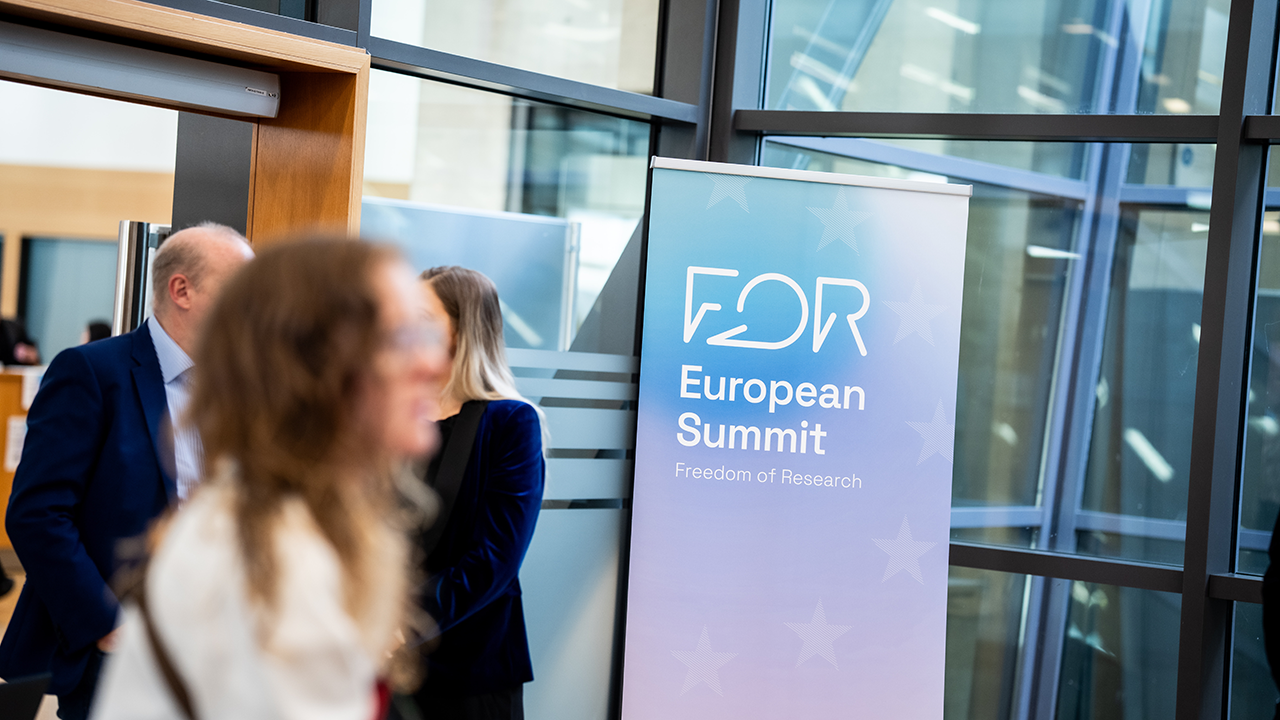
In a time of geopolitical tension and social division, streams of disinformation, and political interference in science, academic freedom is increasingly under threat, even in places known for their free and thriving academic landscape. With its focus topic Europe in Times of Divisions, this year’s Freedom of Research: A European Summit provided a space for joint reflection and discussion on how Europe and its scientific community can protect themselves against these threats.
Jointly organized by the International Charlemagne Prize of Aachen, the Knowledge Hub and the Käte Hamburger Kolleg c:o/re of RWTH Aachen University, the Summit’s two-day program included a festive evening reception at the Aachen Town Hall’s Coronation Hall, a symposium, and the Stand-up FoR Science Night in a local cinema. The symposium, which took place on November 6 at RWTH Aachen University’s SuperC, brought together scholars, politicians, and business representatives to promote dialogue and explore ways to build bridges, uphold shared values, and foster scientific exchange in times of division.
Bridging knowledge and power
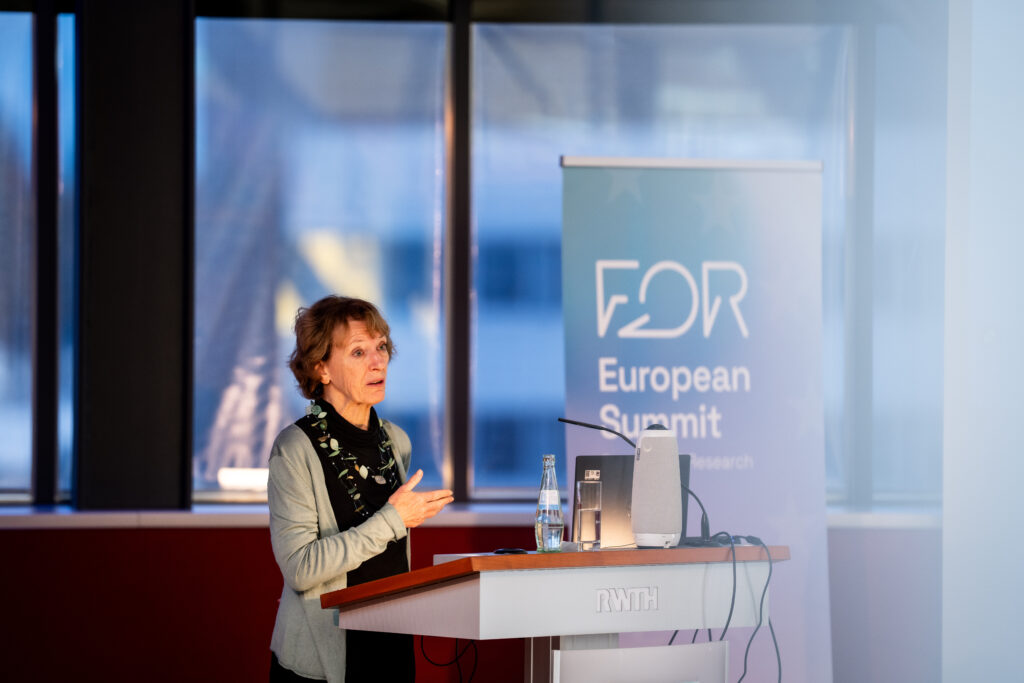
The keynote speech was held by Prof. Dr. Maria Leptin, President of the European Research Council, who emphasized the importance of exchange and dialogue to protect the freedom of research, a task that requires tolerating and even fostering dissent. In her analysis, she pointed out that universities, in particular, are under attack because they are places where people question prevailing conventions, ask uncomfortable questions, and embrace curiosity. Yet science best serves the state and society precisely when it’s free from ideological content and constraints. Science is not a service, its value lies in its slow, exploratory quality. Professor Leptin criticized some trends in funding and evaluation programs that are linked to an understanding of science as a utility: “Pizza gets delivered, not research results.”
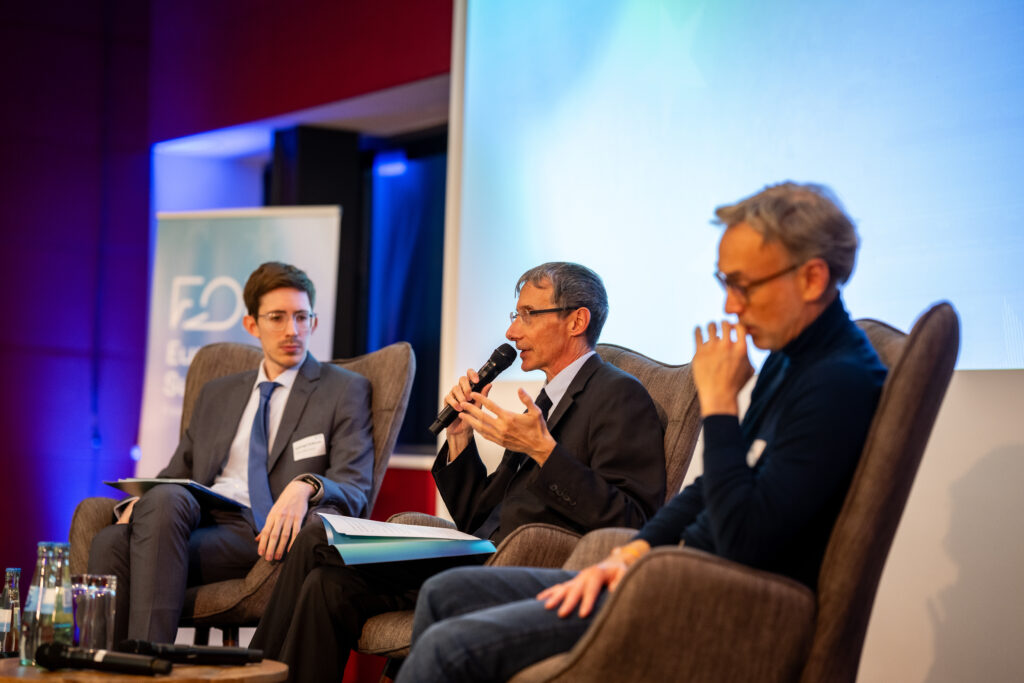
The follow-up panel further developed the question of how funding can be used as a tool of political power, with contributions by Dr. Toon van Overbeke, Charlemagne Prize Fellow 2024/25, Caroline de Gruyter, European Affairs Correspondent and Columnist, Prof. Dr. Maria Leptin, and Erica Lutes, Head of Fulbright Commission Brussels. They advocated stable, performance-independent institutional funding and emphasized that the freedom to take intellectual risks, embrace failure, and build public trust is essential for science as a public good – in Europe and beyond.
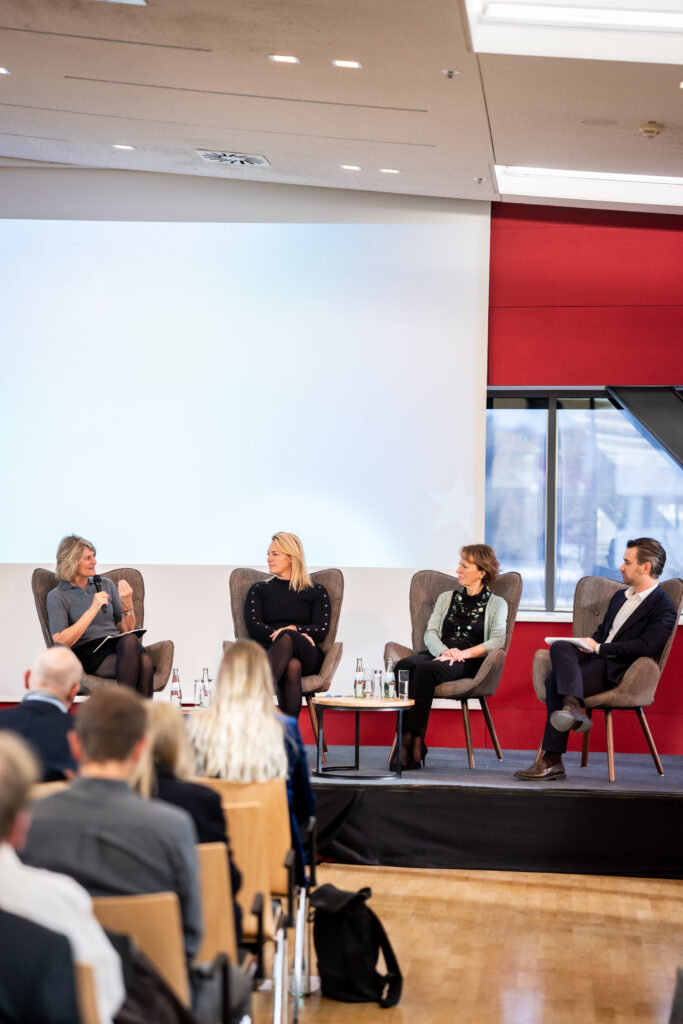
Prof. Dr. Maria Leptin, and Dr. Toon van Overbeke
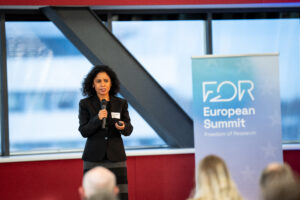
The symposium then featured two TED-style talks: Dr. Dr. René von Schomberg, shed light on a different kind of threat to the freedom of research: the digital transformation of the academic publishing system. In this system, data analytics shape the credibility and focus of research, and bibliometric indices have become an autonomous currency determining the value of research. He raised the question of whether researchers in this system are truly free and independent and noted how competition results in the loss of mutual responsiveness and collaboration within the scientific community, thereby also damaging the freedom of research. Publishers reduce wisdom to the strategic use of knowledge, making research results irrelevant, as long as bibliometric data can be used as main criterion for ranking the “most important” publications. The second talk also addressed the issue of communication within and outside the academic community: Prof. Dr. Sahana Udupa, Professor of Media Anthropology at LMU Munich, explored how fun and humor on social media could be reframed from exclusionary extreme speech to foster new ways of connecting. She pointed out how reclaiming humor and dignity in online spaces is a powerful way to combat platforms that encourage hate speech and online trolling.

Bridging interests and ideals
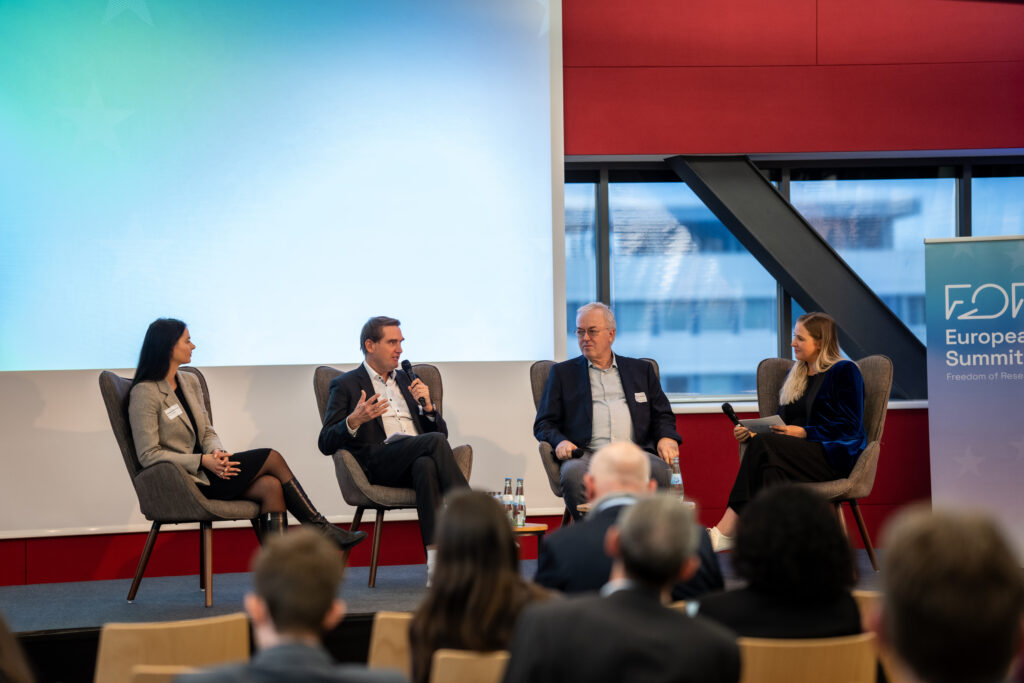
How dependent is Europe on foreign infrastructure? This question was examined in a conversation between Dr. Oliver Grün, Founder and CEO of the GRÜN Software Group and President of the European Digital SME Alliance, Prof. Dr. Dr. Thomas Lippert, Director of Jülich Supercomputing Centre, and Rebekka Weiß LL.M, Head of Regulatory Policy and Senior Manager Government at Microsoft Berlin. They discussed whether EU regulations strengthen Europe’s leadership or limit innovation, as well as how to strike a balance between responsibility, sovereignty, and competitiveness. One of the key takeaways was that Europe must develop its own model of technology based on trust and democratic values. Additionally, it was emphasized that digital sovereignty is crucial for Europe to prepare for the future and be capable of shaping the global technological order.
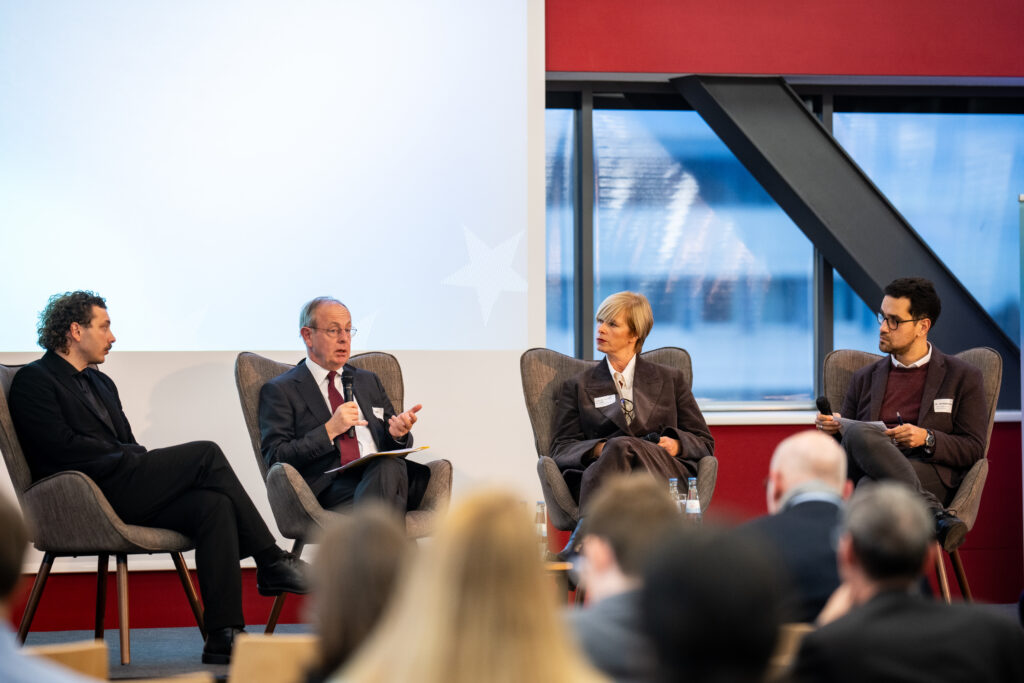
Technological innovation is particularly important for helping face the challenges of climate change. The European Union’s goal of creating 100 climate-neutral and smart cities by 2030 aims at driving a sustainable, inclusive, and resilient urban future, but it is very ambitious. The panel discussed the challenges of this project building upon the expertise of Dr. Ali Abdelshafy, Charlemagne Prize Fellow 2024/25, Patrick Child, Deputy Director-General of DG Environment at the European Commission, and EU Mission Manager for Climate-Neutral and Smart Cities, Prof. Dr. Cornelia Redeker, Professor in Architecture and Head of Umeå University School of Architecture, Member of the New European Bauhaus Facility Experts Group, and Valentino Tignanelli, Architect, Designer and Project Manager at Aaltosiilo Ry and Factum Foundation in Oulu, Finland. Successful climate initiatives depend on collaboration with various stakeholders from science, politics and society. The panelists examined the tension between utopia and reality. How can ambition turn into action, economic interests into sustainability, and policy into lived experience? The panel concluded that, in the pursuit of climate neutrality, it is important to consider the balance of prosperity, sustainability, and heritage, and to discuss buildings in the context of their surroundings.
Bridging science and society
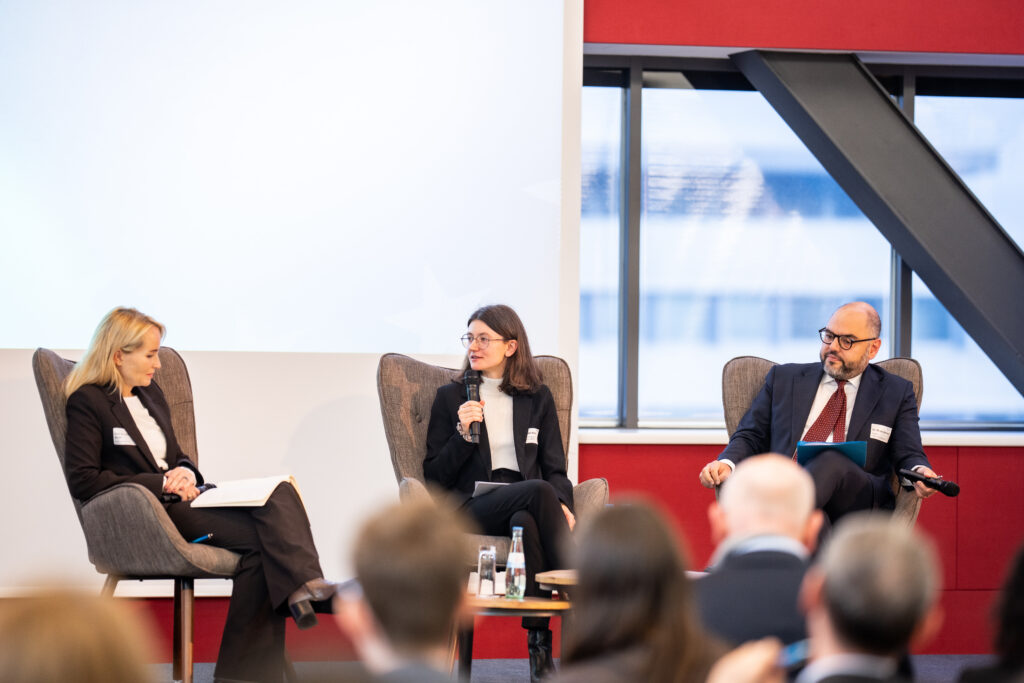
Exchange opportunities and the need for dialogue were further emphasized during the panel on “Rethinking EU Enlargement,” moderated by Sophia Beiter, Charlemagne Prize Fellow 2024/25, featuring Prof. Dr. Giselle Bosse, Full Professor and Chair in EU External Democracy Support at Maastricht University, and Dr. Giulio Venneri, Deputy Head of Unit, Directorate-General for Enlargement and Eastern Neighbourhood (DG ENEST) at the European Commission. The discussion focused on how science, politics, and civil society can be better connected and how effective communication can help rebuild trust and engagement with citizens in times of democratic backsliding, geopolitical uncertainty, and declining public trust. Addressing the topic of EU enlargement, the panelists agreed that citizens must be informed about potential benefits and possible challenges, as well as how European institutions plan to meet the latter by “not only promoting, but also defending democracy,” as stated by Giulio Venneri.
The symposium concluded with a discussion about education as one of Europe’s most powerful instruments for fostering connection across borders, disciplines, and generations. Panelists were Santiago Ardisson, Jean Monnet Professor at Universidad Austral, Boris Walbaum, Founder and President of Forward College, and Walter Zampieri, Head of Unit for European Higher Education at the European Commission. How can universities and knowledge communities uphold freedom of thought, rebuild trust, and promote cooperation within Europe and with other regions of the world? The panel explored how the EU fulfills its mission of fostering teaching, research, and innovation as a foundation for open, democratic societies through initiatives such as the European University Alliances. The problems higher education is facing today were also addressed, in particular the dominance of AI technologies. From this perspective, lecture halls are important spaces that encourage human interaction and the development of intelligent individuals skilled in overcoming the societal challenges of today and tomorrow.
Protecting academic freedom as an individual and institutional priority
At the end of the day, it had become clear that open dialogue and scientific exchange, independent of pressure from funding and publishing systems, are essential to protecting and upholding European values of freedom and democracy. Both scholars and institutions must remain alert to potential restrictions on academic freedom, because influences that may later prove decisive may not be clearly recognizable at the time decisions are made. When considering protective measures, it is important to think about possible undesirable consequences and avoid sliding into isolation, exclusion, and the radicalization of debates. Freedom requires respect and mutual recognition. In order for Europe to continue developing democratically, scholars and institutions must work together as responsible actors to create and implement approaches that safeguard freedom of research – building bridges along the way.
Photo Credits: Christian van’t Hoen