


“Digital Complexity” was the keyword inspiring last semester’s Lecture Series, during which scholars with diverse backgrounds and interests offered their perspectives on how to characterize and problematize it. Starting point was the idea of digital complexity often found today in discussions on Artificial Intelligence (AI). Based on deep learning algorithms, these systems appear to offer means of knowledge production not only reaching beyond human capabilities, but actually producing results that challenge human understanding. While this vision is usually read either as a promise or as a threat, one may also wonder about the legitimacy of claims of knowledge “beyond human understanding,” as millennia of philosophical reflections have so far failed to deliver a generally accepted characterization of human understanding.
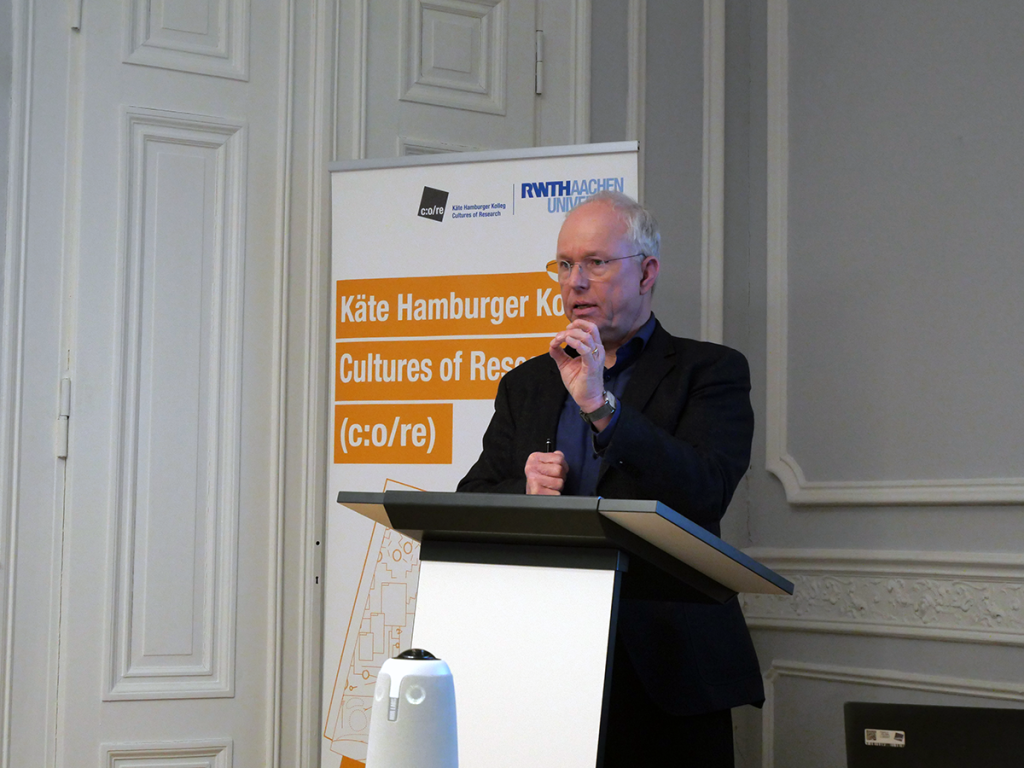
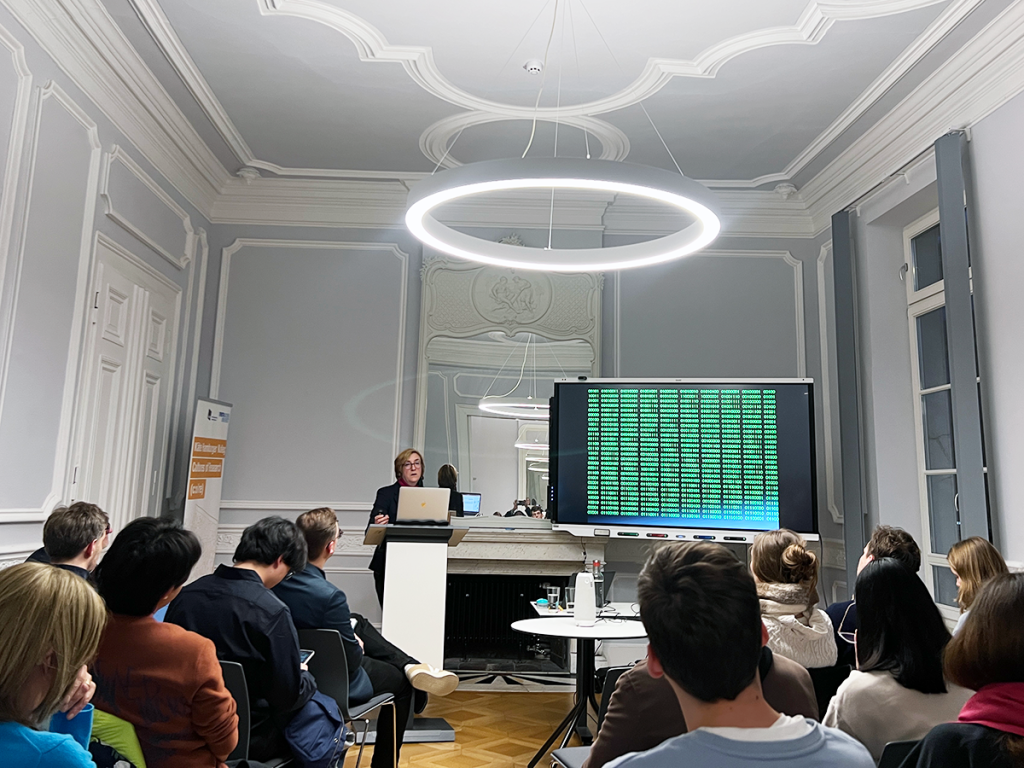
Scholars from the sciences and from the humanities may have different takes on this subject, as the different lectures showed. Social theorist Dirk Baecker (formerly Zeppelin University Friedrichshafen) presented a perspective on digital complexity from the point of view of computer scientists developing deep learning programs. He suggested that the opacity is rooted in the fundamental feature of those codes, namely their dependence on stochastic procedures in which probabilistic distributions play a central role. Indeed, if AI performance is based not on deterministic procedures, but on probabilistic patterns, it is perhaps not surprising that it appears complex beyond human understanding. Yet computer-implemented stochastic algorithms are not the only example of non-deterministic processes: human emotional experiences also often challenge understanding, as media scholar Anna Tuschling (Ruhr University Bochum) demonstrated in her talk. She discussed the interface between affective computing and emotional AI. Can deep learning programs, precisely due to their complexity, be especially well posed to both interpret and simulate emotions? Should we regard this possibility as worrying? Looking back at the history of attempts to computationally grasp feelings, Tuschling argues that, while today’s approaches in digitally emulating emotions may be rightly criticised, they also offer a chance to better understand human affective landscapes.
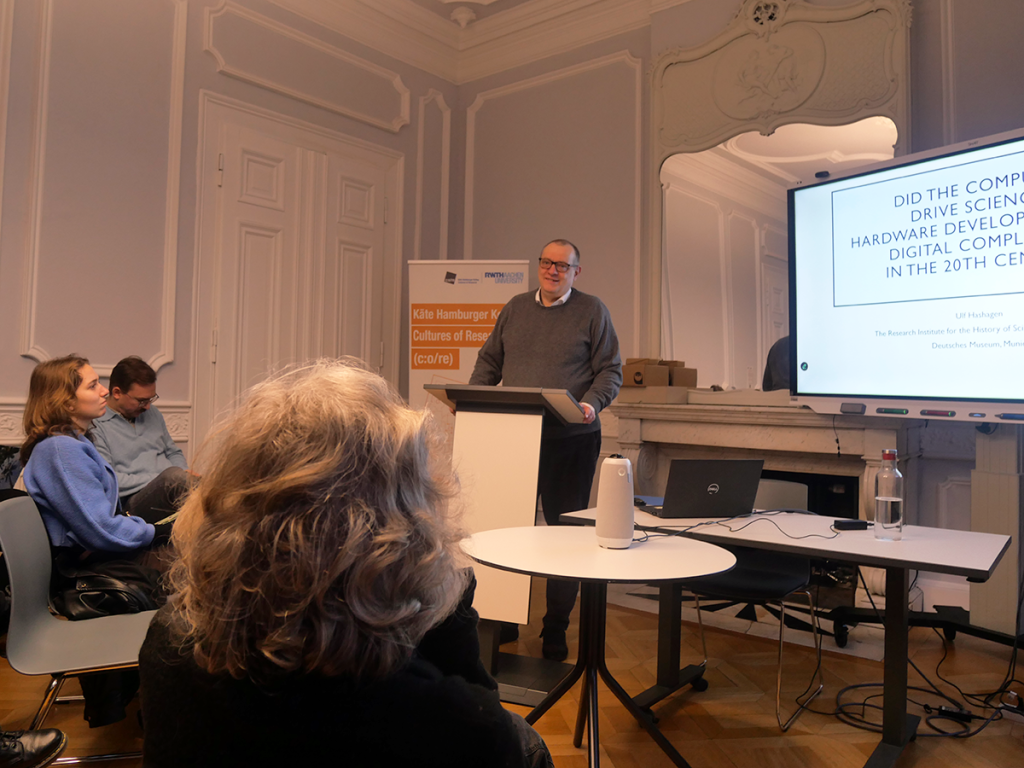
Historian of technology Ulf Hashagen’s (German Museum Munich) talk shifted attention to what is usually regarded as the most rational, non-emotional of human activities: science. Hashagen took as starting point claims that an “AI revolution” is taking place in science: theory building has allegedly ceased to be a goal, replaced by the development of opaque algorithms delivering correct predictions, but no explanation. While the cause for this alleged shift is once again seen in deep learning algorithm and their digital complexity, Hashagen notes that those algorithms, as all other computational practices in science, have only become possible thanks to hardware innovations, in this case Graphic Processing Units (GPUs). Should this situation be taken to mean that in the end hardware developments rather than algorithms are responsible for digital complexity and a revolution in science? Or is this claim an example of much-criticised technological determinism? Hashagen argued that such questions can be answered only by longue-durée historical investigations taking into account the whole development of computational tools, as well as the economic, social and political contexts that made them possible.
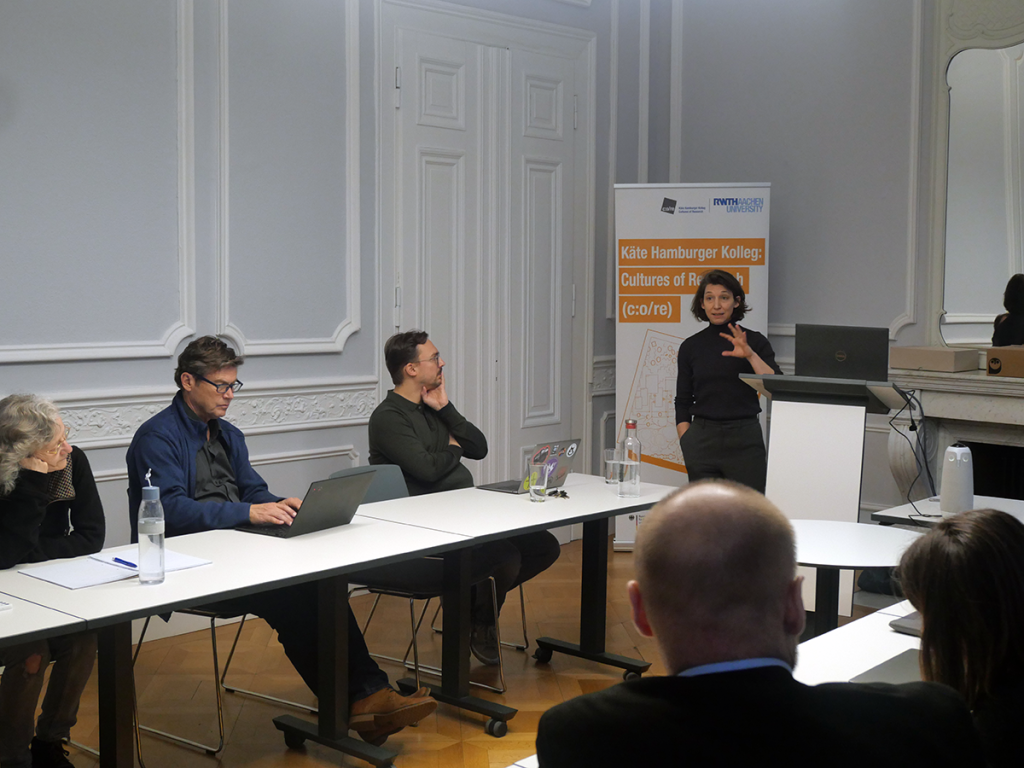
While Hashagen’s reflections concerned the issue of digital complexity in science as a whole, historian of science Charlotte Bigg’s (Centre National de la Recherche Scientifique, Centre Alexandre Koyré, Paris) talk zoomed into a specific kind of digital practice in a particular science: data production and visualization in astronomy. Like Hashagen, Bigg, too, offered a historical-epistemological study, beginning with the use of daguerreotypes in observational astronomy during the nineteenth century, and moving forward up to and including computer-aided data collection and visualization at today’s NASA laboratories. Bigg noted how, despite the widely diverging technical premises and usage methods, all of those past and present practices were referred to and conceived of as “photography.” Bigg discussed how the methods evolved hand in hand with the scientific discipline, and addressed the epistemic implications of their perceived continuity. From the perspective of digital complexity, it is extremely interesting that astronomers apparently see no clear break between older, analogue photography and the digital methods used today to produce data and images of such complex research objects as black holes: if digital complexity is there, it remains invisible.
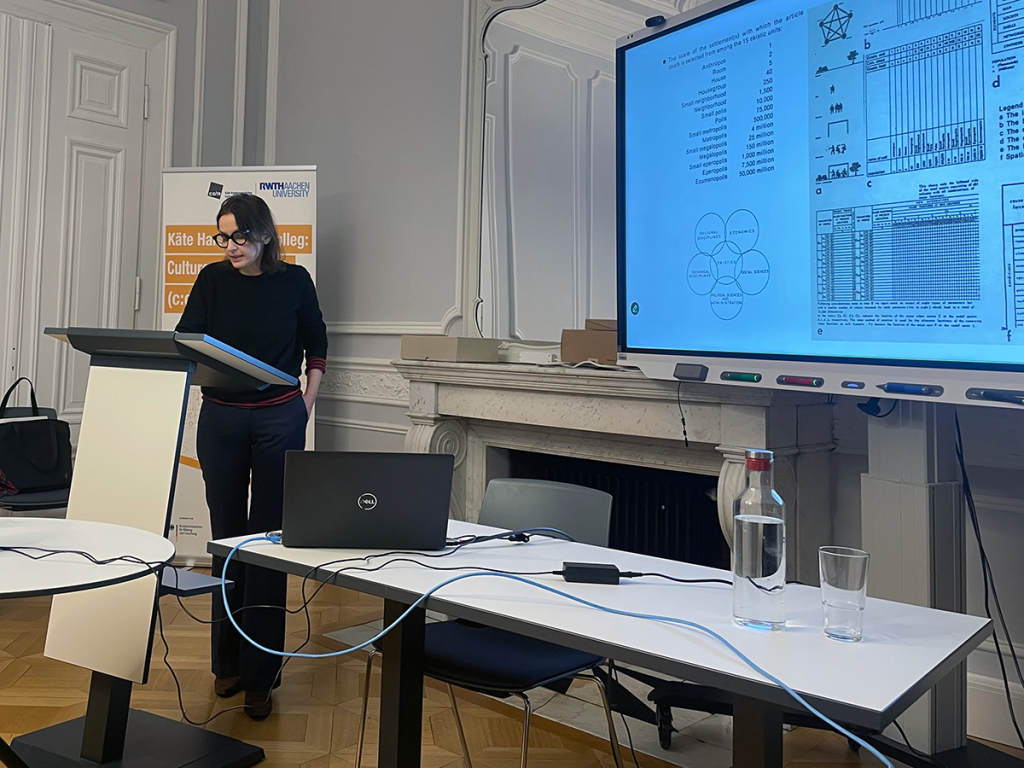
Yet, digital complexity can play a role also beyond issues of technological and epistemic opacity: while digital tools are today part of essential infrastructures in science and society, they have an equally central role at a political and ideological level, as paradigmatic symbols of innovation. Architectural theorist Nathalie Bredella (Leibniz University Hanover) discussed this double role using as an example the work of architect Constantinos Doxiadis, a prominent figure and leader of projects of urban planning in Greece and an international level. In the 1960s, Doxiadis created ekistics, the science of human settlement, based on the collection and analysis of great amounts of data on urban environments, their infrastructure and population. Using approaches from systems theory and cybernetics, ekistics aimed at determining optimal ways of designing and managing a settlement with respect to both the needs of its inhabitants and the ecology. Doxiadis established cooperations with computer manufacturers, and various computing centres were involved in analysing data for his projects. While the actual effectiveness of these computational methods was often not up to its promises, the computer nonetheless came to be regarded as the ideal tool for settlement and environment management at the urban and planetary level, a perfect expression of the Western technocratic context of the 1960s and ’70s. One may wonder how far discourses of digital complexity beyond human understanding today also serve to reinforce the technocratic, authoritative image of computers.
Coming back to the original question accompanying the Lecture Series on “Digital Complexity,” knowledge production reaching beyond human capabilities still offers room for further exploration. That’s why the Lecture Series in the Summer Semester 2026 will continue to focus on this topic and feature speakers such as Judith Simon (University of Hamburg), Michaela Massimi (University of Edinburgh), and Anna-Verena Nosthoff (University Oldenburg).