
How can the research topics and interests of the KHK c:o/re be made more visible and tangible for people outside of the academic community? Since the center’s research focuses on the changing research cultures of science and technology and their connection to societal challenges, its work also reflects people’s expectations of science, particularly in the humanities. To facilitate dialogue about the research processes and methods of the center, the hashtag “Unboxing Science” was created. The name reflects the center’s wish to build a bridge between complex research questions and people’s everyday lives. The hashtag aims to promote a deeper understanding of how interdisciplinary research between the humanities and social sciences and the life, natural, technical and engineering sciences at a technical university works, as well as to identify questions that people outside of the disciplinary community have about the center’s work.
The science night at RWTH Aachen University, which takes place once a year, offers an excellent opportunity to get in touch with pupils, students, citizens of Aachen, and colleagues from the university. This brief summary of the past two years’ experiences reflects on the approaches of seeking conversation with people from different backgrounds and ways of easing the path to understanding the center’s research questions.
Unboxing Science: Experiencing Knowledge in Art and Society
In November 2024, after hosting several art events at the center, including the installation “Unfelt Treshold” and the audio performance “Listening to Science”, the goal of participating in the science night was to address the diversity of scientific research methods, particularly highlighting the role of artistic research at a university like RWTH Aachen, with its strong focus on technology and engineering.
Through our booth, the goal was to challenge the persistent cliché that the humanities and social sciences are not “real” sciences. By talking to visitors, we wanted to show that science is diverse and encourage people to look beyond conventional notions of research. We demonstrated how artistic formats can increase the visibility of research in the humanities and social sciences, by promoting dialogue between different stakeholders and target groups, and generating new insights as a research method on its own.
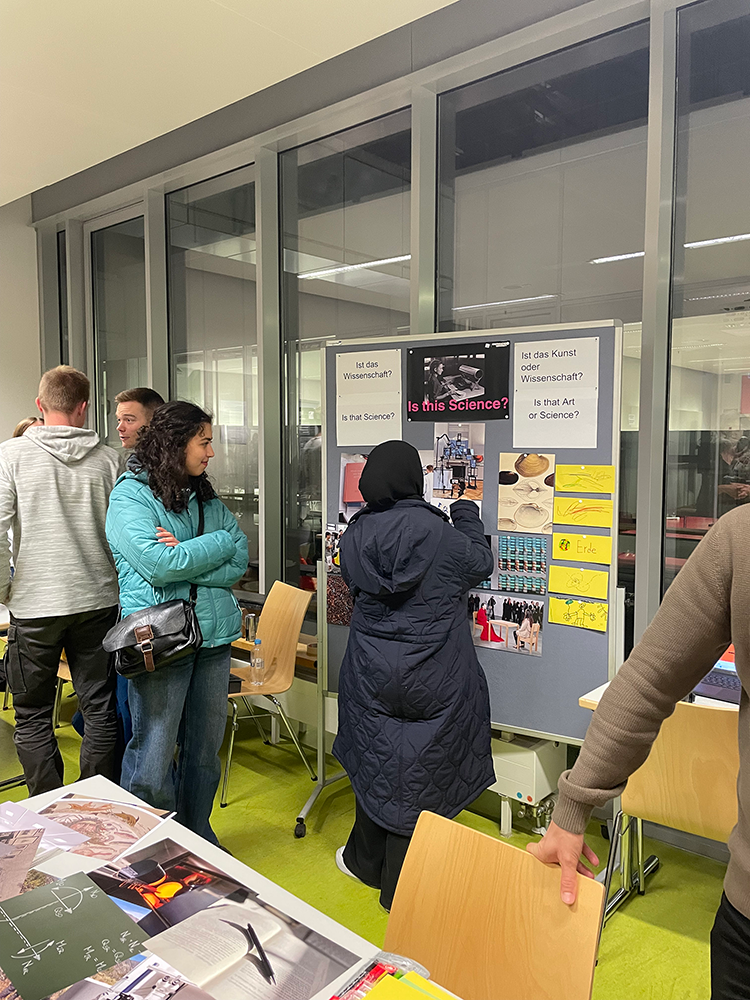
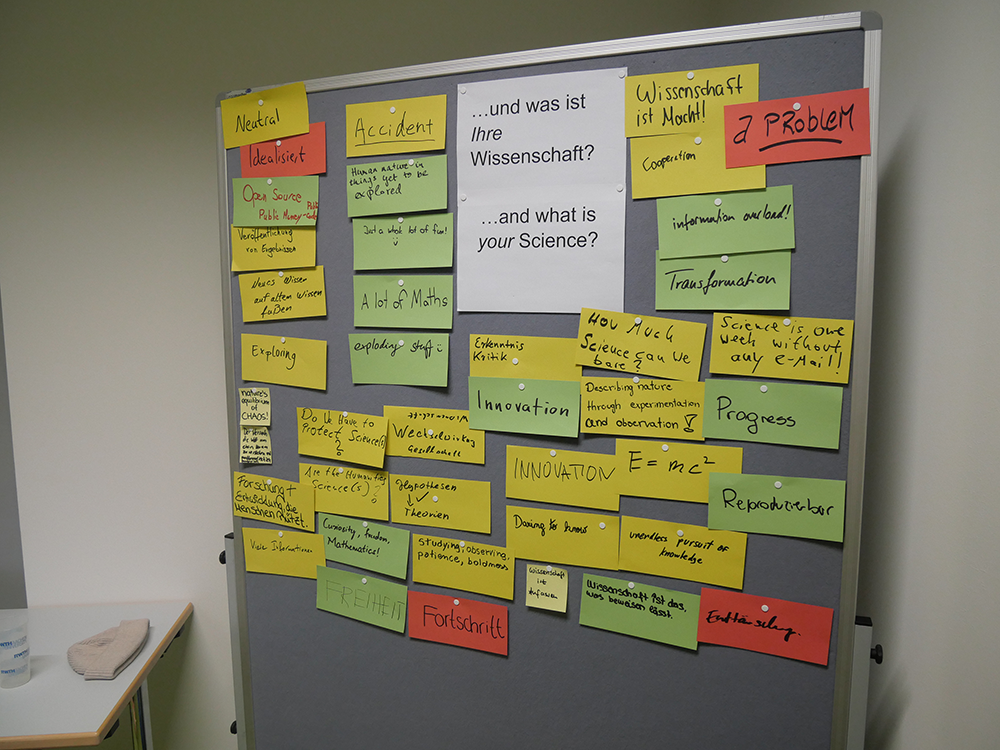
For this purpose, we designed postcards that play with stereotypical ideas of science and research in order to stimulate discussion. We also asked visitors to think about questions such as “Is this science?” and “Is this art or science?” and categorize printed pictures accordingly. To broaden perspectives on science and research, we invited them to write their personal definition of science on a Post-it note using the prompt “What is your science?”. In this way, we aimed to draw attention to the difficulties in defining science and, more specifically, the question of who decides what science is and which criteria need to be met to define it.
Unboxing Science: Dinosaurs, Computers, and the Game of Life
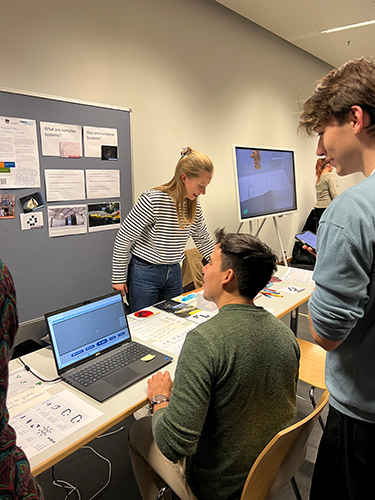
How are dinosaurs, computers, and the Game of Life connected? With the center’s focus topic “Digital Complexity” in the winter term 2025/26, our goal in participating in the science night was to provide insight into the questions that c:o/re and its fellows are currently exploring. Our booth focused on chaos theory and complex systems. First, we showed how chaotic behavior and complex systems exist everywhere in nature, ranging from evolutionary questions to weather phenomena. Next, we wanted to show how digitalization is used to handle complexity and the challenges that arise. This goes back to the 1960s, where researchers used computer models to predict the weather and discovered that, even if you understand a system’s rules, you still can’t fully predict what will happen because the system’s behavior is highly sensitive to initial conditions.
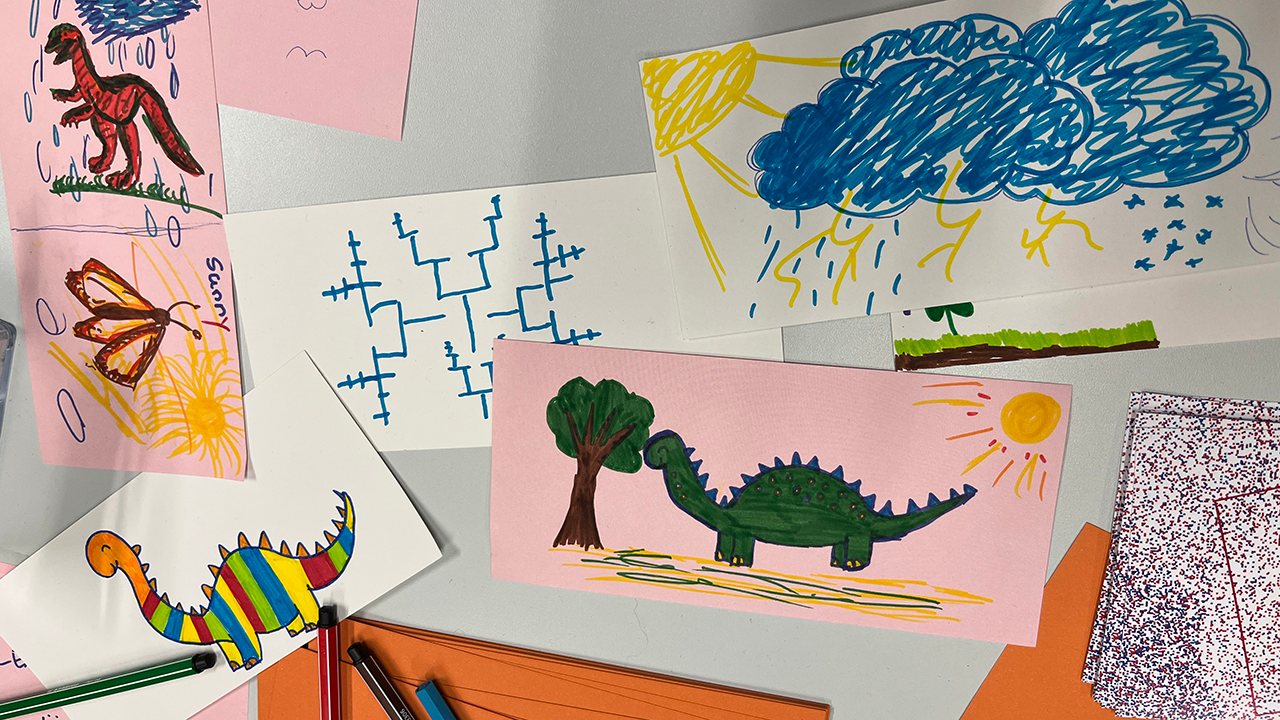
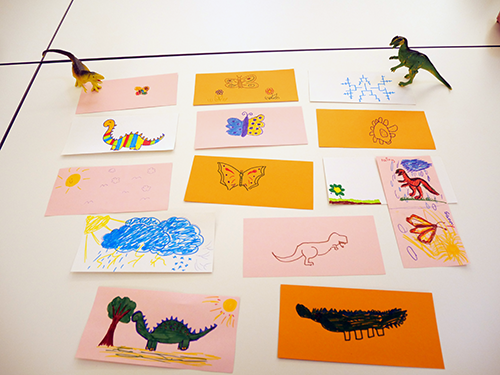
At the science night, we demonstrated this by discussing Steven Spielberg’s “Jurassic Park”. In the film, controlling the dinosaurs proved impossible due to small changes leading to significant, unexpected outcomes. By playing John Conway’s “Game of Life,” visitors could see for themselves that predicting the behavior of all possible configurations is impossible. They were furthermore invited to draw their own complex system, and the artistic results ranged from new species of dinosaurs to butterflies and weather phenomena.
Both experiences led to many interesting conversations with a diverse audience that gave us insights into their perception of science. They showed once more the importance of “unboxing” complex research topics through science communication formats to demystify research work and strengthen trust in scientific knowledge production.